Yalda Celebration in Iranian Culture
Yalda Night, known in Persian as Shab-e Yalda, is one of the most cherished traditional celebrations in Iranian culture. It is observed on the night of the winter solstice, the longest and darkest night of the year. For generations, Yalda has symbolized the passing of darkness and the gradual return of longer days and increasing light.
The word “Yalda” is associated with the idea of birth, and over time the celebration has come to represent the rebirth of light after the longest night of the year. This symbolism has made Yalda a celebration not only of the changing seasons but also of hope, endurance, warmth, and togetherness.
One of the most important aspects of Yalda is the gathering of family and friends. Traditionally, relatives come together in the home of an elder member of the family and spend the evening talking, telling stories, sharing memories, eating, and enjoying one another’s company. Staying awake until late at night is part of the tradition, reflecting the idea of passing through the longest night together.
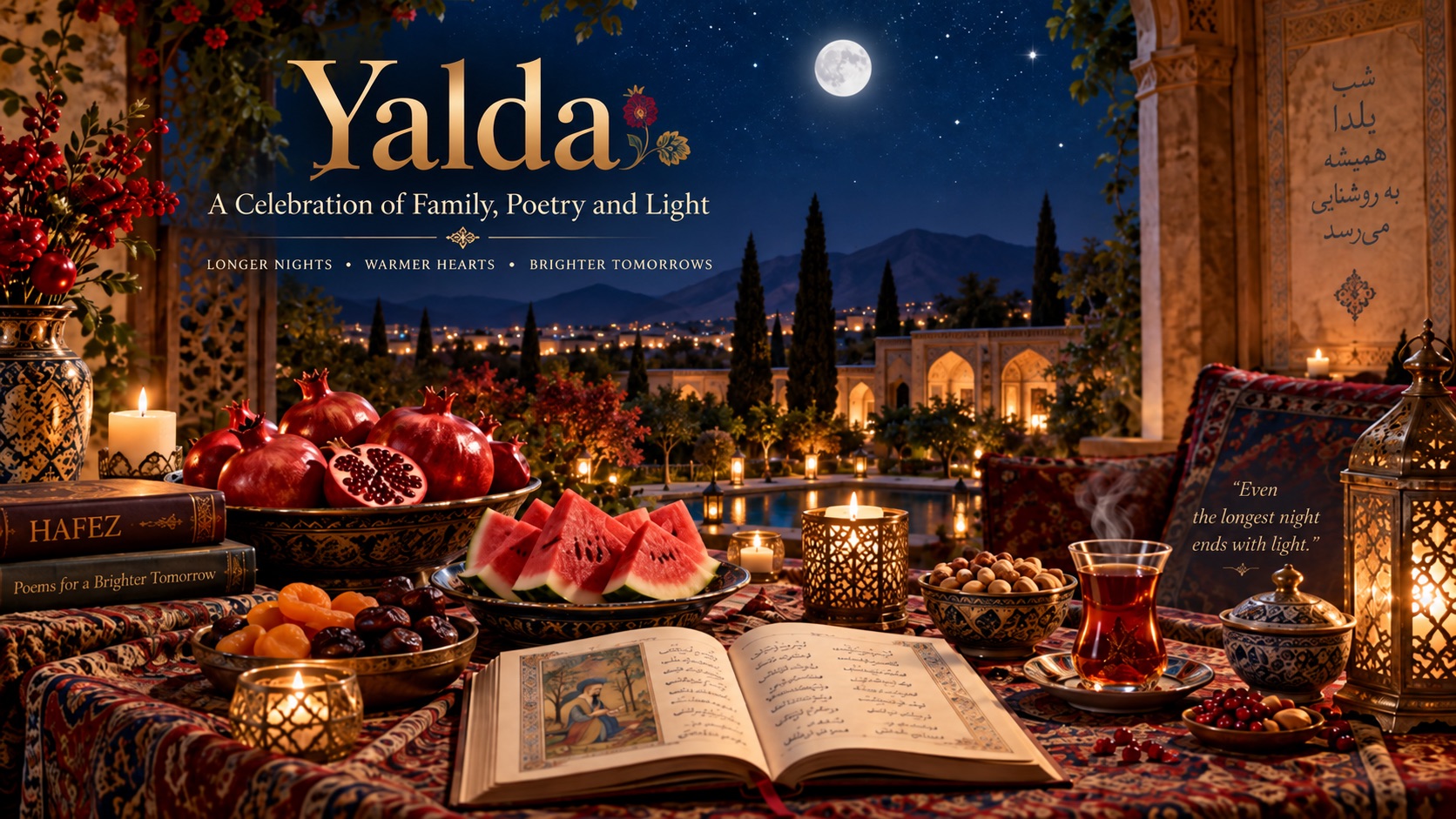
Food plays a meaningful role in Yalda celebrations. Pomegranates and watermelon are among the best-known foods associated with the occasion. Their bright red colour is often connected symbolically with warmth, life, and the sun. Families also serve nuts, dried fruits, sweets, tea, and seasonal foods. The exact traditions vary from one region and household to another.
Persian poetry is another central element of Yalda Night. Many families read the works of Hafez, one of Iran’s most celebrated poets. A common tradition is Fal-e Hafez, in which a person opens Hafez’s poetry at random and interprets the poem as a reflection on a question, hope, or concern. This custom brings literature, imagination, and conversation into the celebration.
Storytelling has historically been an important part of Yalda as well. Older family members may share stories, memories, legends, or family histories with younger generations. In this way, the celebration becomes an opportunity to preserve cultural knowledge and strengthen connections between generations.
Music may also accompany Yalda gatherings, particularly in contemporary celebrations. Traditional songs, Persian classical music, folk music, or modern Iranian music are often included in community events and family gatherings. In cultural organizations and public celebrations, Yalda may also be marked with live performances, poetry readings, dance, visual art, and educational presentations.
Although Yalda has very ancient roots, it remains highly relevant in modern life. Iranian communities throughout the world continue to celebrate it in homes, cultural centres, schools, concert halls, and community organizations. For people living outside Iran, Yalda can be especially meaningful because it provides an opportunity to maintain cultural traditions and introduce them to younger generations.
More than a seasonal celebration, Yalda is a reminder of resilience and hope. The longest night eventually gives way to increasing light, making the celebration a powerful symbol of optimism. Through family gatherings, poetry, music, storytelling, and shared food, Yalda continues to connect Iranians across generations and across the world.