About Iranian Music
Iranian music, also known as Persian music, is one of the oldest and most distinctive musical traditions in the world. It has developed over centuries through a close relationship with poetry, literature, spirituality, storytelling, and regional culture. Rather than being based primarily on harmony in the Western classical sense, much of traditional Iranian music places great importance on melody, improvisation, ornamentation, and emotional expression.
At the heart of Persian classical music is the Radif, a carefully organized collection of traditional melodic patterns that has been preserved and passed down from master to student for generations. The Radif serves both as a musical repertoire and as a foundation for improvisation. Musicians spend many years studying these melodies, learning not only the notes themselves but also the phrasing, character, and expressive language associated with each musical mode.
Iranian classical music is organized through a modal system known as the Dastgah system. Each Dastgah contains a group of related melodies, or gushehs, that create a particular musical atmosphere and emotional quality. Through these structures, musicians are able to move between composed material and spontaneous improvisation while maintaining the character of the tradition.
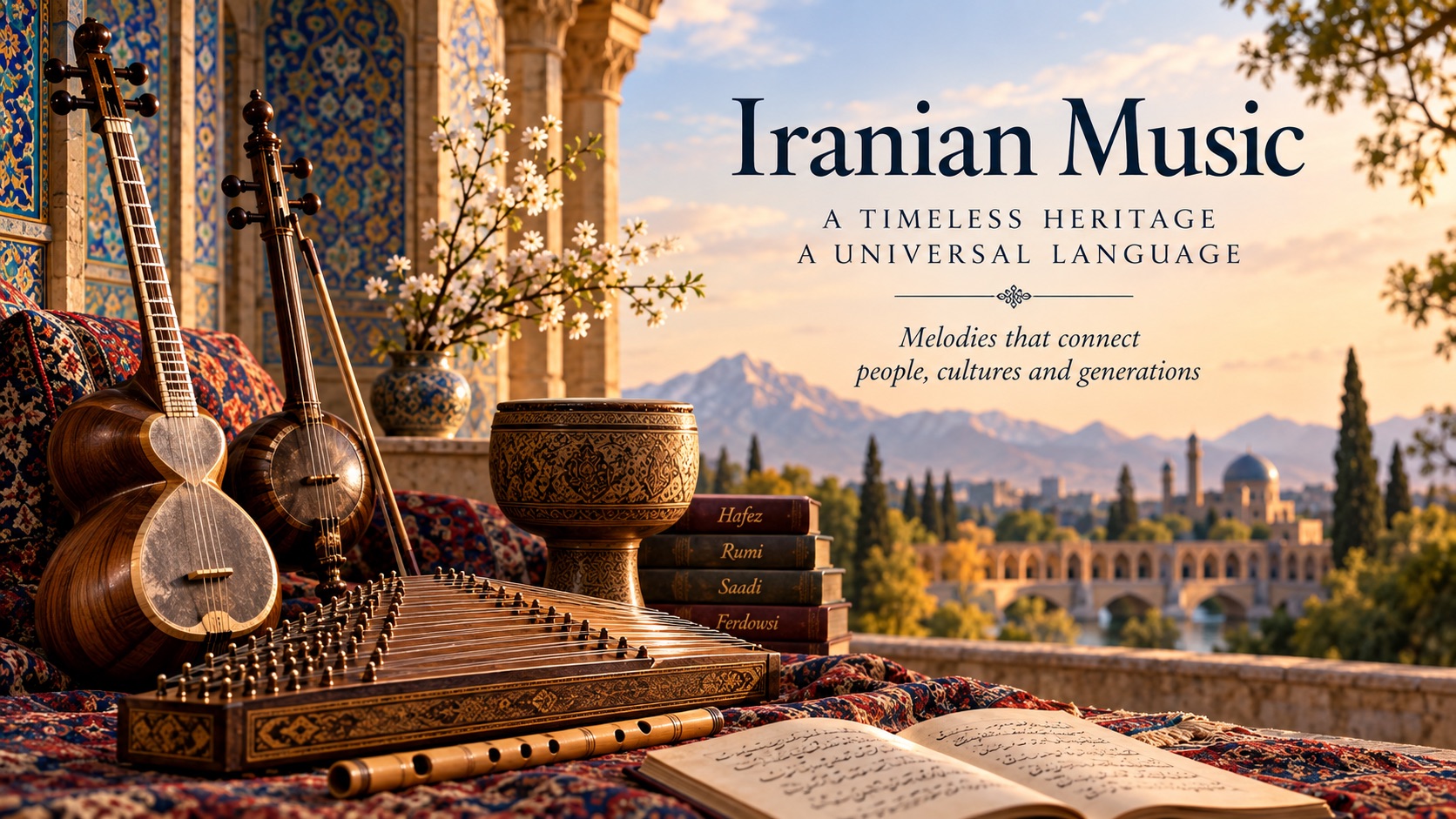
Traditional Iranian instruments are also central to the identity of this music. The Tar and Setar are long-necked plucked instruments known for their delicate and expressive tone. The Santour, a hammered dulcimer, produces a shimmering and resonant sound. The Kamancheh, a bowed string instrument, is especially valued for its vocal-like quality. Wind instruments such as the Ney, together with percussion instruments such as the Tombak and Daf, add further colour and rhythmic richness.
Vocal music has a particularly important place in Iranian culture. Persian singing is deeply connected to classical poetry, especially the works of poets such as Hafez, Saadi, Rumi, Ferdowsi, and Omar Khayyam. A singer is expected not only to perform with technical skill but also to communicate the emotional and literary meaning of the poetry. This connection between music and verse gives Iranian vocal music a highly expressive and intimate character.
Iran is also home to many regional musical traditions. The music of Kurdistan, Azerbaijan, Khorasan, Gilan, Mazandaran, southern Iran, and other regions reflects different languages, instruments, rhythms, and local customs. These traditions contribute to the remarkable diversity of Iranian musical culture.
Throughout the twentieth and twenty-first centuries, Iranian musicians have continued to preserve these traditions while also creating new forms of expression. Persian classical music has been combined with orchestral music, jazz, contemporary composition, film music, and popular styles. Iranian musicians living around the world have also helped introduce this heritage to international audiences.
Today, Iranian music remains an important expression of cultural identity and collective memory. Whether performed in an intimate traditional setting, a concert hall, a community celebration, or a contemporary production, it continues to connect generations through melody, poetry, and shared cultural experience.