Nowruz Celebration in Iranian Culture
Nowruz, meaning “New Day,” is the Persian New Year and one of the oldest continuously celebrated cultural traditions in the world. It marks the arrival of spring and the beginning of a new year in the Iranian calendar. More than simply a New Year celebration, Nowruz represents renewal, hope, rebirth, family, and the close relationship between human life and the natural world.
Nowruz begins at the exact moment of the spring equinox, when day and night are approximately equal in length. This moment usually occurs around March 20 or 21. Families often gather together before the new year begins, waiting for the precise moment of Tahvil-e Sal, or the turning of the year.
Preparations for Nowruz begin several weeks in advance. One of the most important traditions is Khaneh Tekani, or “shaking the house,” which refers to the thorough cleaning of the home. This custom symbolizes leaving behind the difficulties and disorder of the previous year and welcoming the new year with a fresh beginning.
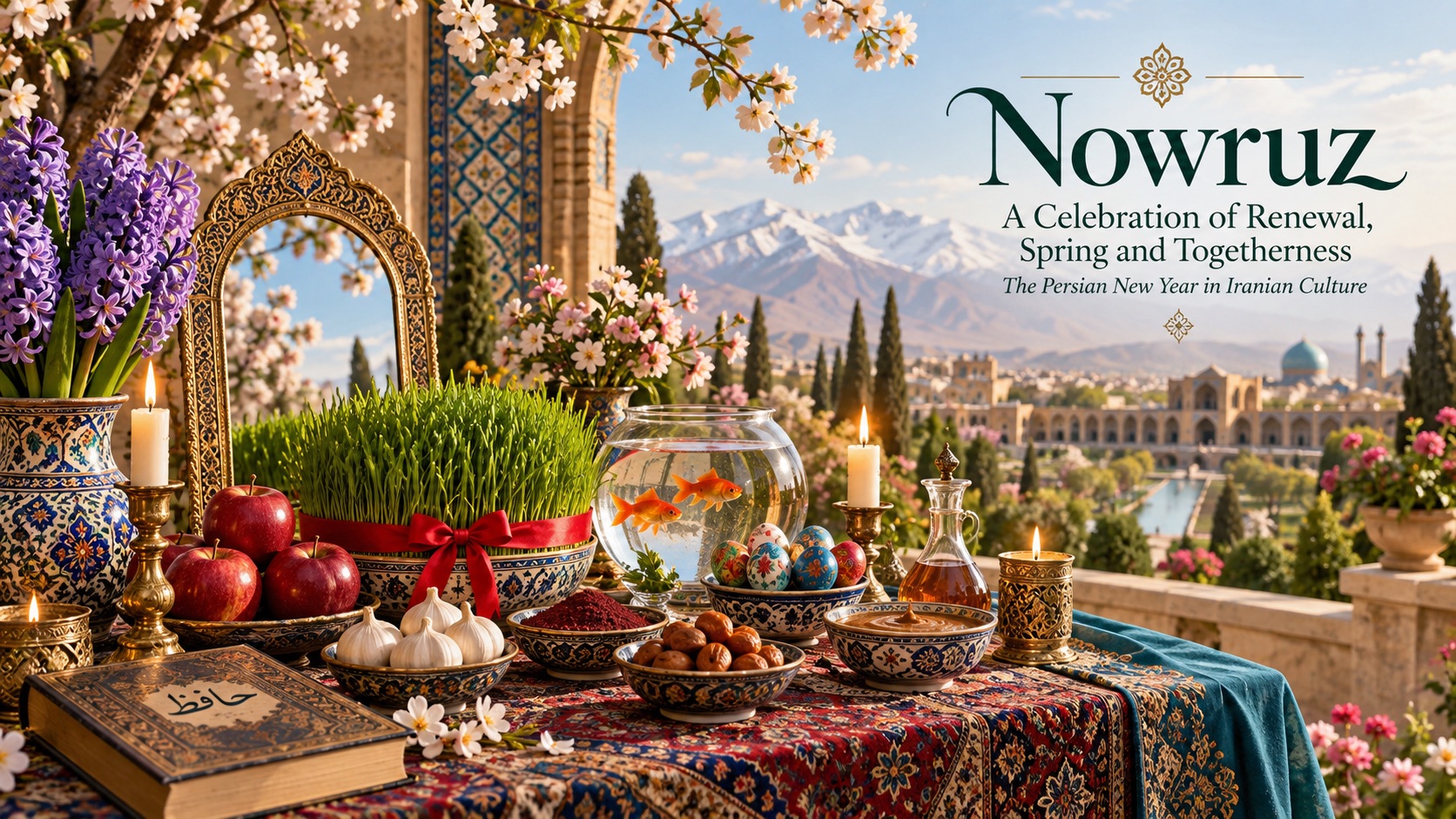
Another central tradition is the preparation of the Haft-Seen table. This ceremonial arrangement includes seven symbolic items whose Persian names traditionally begin with the letter “S.” Common examples include Sabzeh or sprouts, representing renewal; Seeb or apple, associated with health and beauty; Seer or garlic, traditionally linked with protection and well-being; Senjed, symbolizing love; Samanu, representing abundance; Serkeh or vinegar, associated with patience and maturity; and Somagh or sumac, often connected with sunrise and renewal.
Other meaningful objects may also be placed on the Haft-Seen table, such as a mirror, candles, painted eggs, flowers, coins, poetry books, religious texts, or a bowl of goldfish, depending on family tradition. Each household may have its own interpretation and arrangement.
Family visits are an essential part of Nowruz. Younger family members traditionally visit elders first, and relatives and friends spend the holiday exchanging greetings, sharing food, and offering good wishes for the year ahead. Children often receive gifts or money known as Eidi.
Food also has an important role during the celebration. Traditional dishes may include Sabzi Polo ba Mahi, herbed rice with fish, as well as sweets, nuts, fruits, and other festive foods. The specific menu can vary from one family and region to another.
Nowruz celebrations extend beyond the first day of the year. The holiday traditionally continues for thirteen days. The final day, known as Sizdah Bedar, is usually spent outdoors in parks, gardens, or the countryside. Families gather for picnics, games, music, and social activities, symbolically reconnecting with nature at the beginning of spring.
Nowruz is also celebrated far beyond Iran. Communities across Central Asia, the Caucasus, the Middle East, and other parts of the world observe the holiday in different forms. Iranian communities in Canada, Europe, the United States, Australia, and elsewhere have also helped keep these traditions alive through concerts, festivals, community gatherings, and educational events.
At its heart, Nowruz is a celebration of renewal and continuity. It connects ancient customs with contemporary life and brings families and communities together through shared traditions. Its lasting significance comes from its universal themes: hope, renewal, gratitude, family, and the promise of a new beginning.